
Table of Contents
Introduction
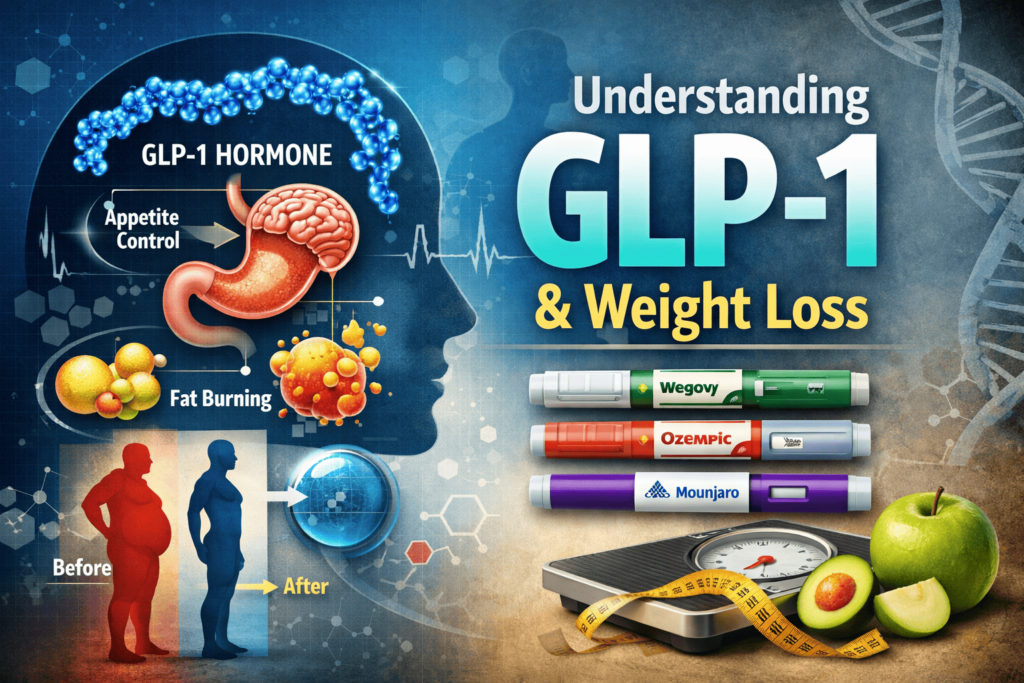
GLP-1 (Glucagon-Like Peptide-1) is a naturally occurring hormone released in the body after food intake. It plays an important role in regulating blood sugar and appetite. Primarily, it stimulates the pancreas to release insulin, helping manage blood glucose levels. At the same time, it signals the brain to promote a feeling of fullness and slows down gastric emptying, which prolongs satiety after meals.Because of these effects, GLP-1 has become a key focus in the treatment of metabolic conditions.
GLP-1-Based Medications:
Medications that mimic GLP-1 were initially developed for managing type 2 diabetes. Over time, their role has expanded significantly into the field of obesity management. These drugs replicate the natural actions of GLP-1, leading to improved blood sugar control, reduced appetite, and support for weight loss. Some commonly used GLP-1 receptor agonists include liraglutide, semaglutide, dulaglutide, lixisenatide, and tirzepatide. Among these, liraglutide (approved in 2014) and semaglutide (approved in 2021) are the most widely studied for weight management.
Effectiveness and Limitations
Clinical studies have demonstrated that GLP-1-based therapies can lead to meaningful weight loss and improvements in metabolic health markers such as HbA1c and lipid profiles. However, their effectiveness varies from person to person. Some individuals may achieve significant weight loss, while others may experience more modest results. It is important to note that these medications are not a standalone solution. If discontinued without sustainable lifestyle changes, weight regain is common. This highlights the importance of addressing the underlying behavioral and metabolic factors contributing to weight gain.
Impact on Muscle Mass and Metabolism
One of the less discussed aspects of rapid weight loss—whether through medication or other methods—is the potential for muscle loss. Inadequate protein intake and lack of resistance training can lead to a reduction in lean body mass. Since muscle plays a critical role in maintaining metabolic rate, its loss can make long-term weight maintenance more challenging.
Side Effects and Considerations
GLP-1 medications are also associated with side effects, most commonly gastrointestinal issues such as nausea and reduced appetite. While these effects may subside over time, they can influence adherence to treatment. Additionally, improvements in metabolic parameters during treatment are largely driven by weight loss itself. If weight is regained after discontinuation, these health markers may return to previous levels.
Long-Term Perspective
GLP-1 therapies should be viewed as supportive tools rather than permanent solutions. Sustainable weight management requires consistent lifestyle modifications, including balanced nutrition, regular physical activity, and long-term behavioral changes. Before initiating such treatment, it is essential to consider whether the achieved results can be maintained without continued reliance on medication. Long-term success depends on building habits that support metabolic health beyond the duration of pharmacological intervention.
Conclusion
While GLP-1-based medications have transformed the approach to obesity management, they do not replace the need for foundational lifestyle changes. Lasting weight loss is not solely about short-term interventions, but about addressing the root causes and maintaining consistent, sustainable habits over time.
References
West S, et al.
Weight regain after cessation of medication for obesity: systematic review and meta-analysis. BMJ. 2025;392:bmj-2025-085304.
Oxford University (Nuffield Dept. of Primary Care Health Sciences).
Stopping weight-loss drugs linked to faster regain than ending diet programmes. 2026.
Wilding JPH, Batterham RL, Calanna S, et al.
Once-weekly semaglutide in adults with overweight or obesity. New England Journal of Medicine. 2021;384:989–1002.