
Table of Contents
INTRODUCTION
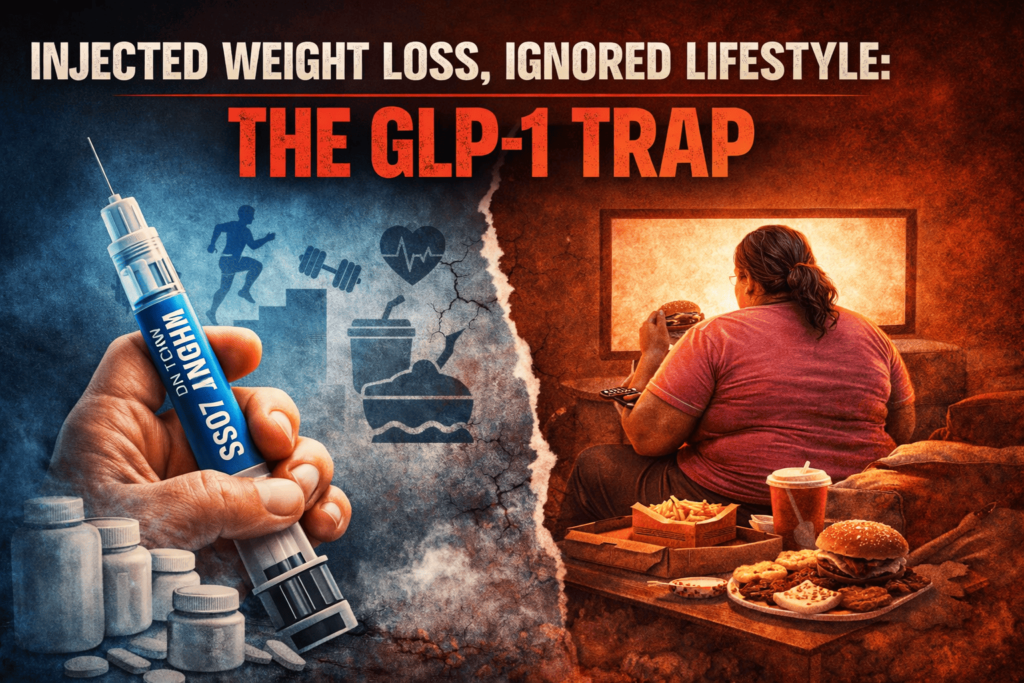
GLP-1 drugs are frequently promoted as a breakthrough in weight loss, but this narrative ignores a developing worry: are we subtly worsening or improving health? Although these medications may appear to aid in weight loss, they may also cause adverse effects such as chronic nausea, gastrointestinal distress, muscle loss, and nutritional deficiencies. GLP-1 may merely suppress appetite rather than truly restoring metabolic health, leaving deeper problems unsolved and fostering the emergence of new ones beneath the surface.
GLP-1 AFTER QUITTING: THE HEALTH-REVERSING REBOUND EFFECT:
GLP-1 treatments like semaglutide are stopped is one of the most important and frequently disregarded concerns. After stopping weight-loss medications, weight regain is not only common but also quick and predictable.
A return to baseline body weight is anticipated within 1.5 to 1.7 years following cessation, with an average monthly gain of 0.4 kg.
The situation seems even more dire for more recent GLP-1-based medications, such as semaglutide. The body can undo months’ worth of progress in a comparatively short amount of time, as some analyses reveal weight regain rates as high as 0.8 kg per month.
YOUR BLOOD MARKERS REVERSE, NOT JUST YOUR WEIGHT
The scale is not the true issue. Cardiometabolic gains made during GLP-1 therapy such as drops in blood pressure, cholesterol, and blood glucose also diminish when the medication is stopped. These health markers would return to pre-treatment levels in about 1.4 years, which closely resembles the time frame for weight gain.
Semaglutide, which is one of the most frequently used GLP-1 receptor agonists, showing that although the body weight is decreased, there is still the loss of fat-free body mass. This creates the paradox whereby the patient is “healthier” because they have lost weight, yet at the same time is metabolically compromised because they have lost muscle reserves.
GLP-1 THERAPY: CONTRAINDICATIONS AND RISKS DURING USE
Fat Loss or Fluid Loss: What Is GLP-1 Really Doing?
GLP-1-induced weight loss is frequently mistaken for direct fat loss, but this misconception oversimplifies a complicated physiological change. Fat reduction is not the only factor contributing to the early and even prolonged decrease in body weight observed with GLP-1 therapy. Particularly in the early stages, a large amount can be ascribed to fluid loss and glycogen depletion.
The image does not always get better after this first stage. The body is not naturally instructed to burn fat preferentially by GLP-1. Instead, the body uses a variety of resources, including fat, muscle, and leftover fluid compartments, to adjust to the decreased energy intake. Muscle mass and water, not just Fat tissue, account for a significant portion of weight lost, according to studies assessing changes in body composition during weight loss interventions.
Muscle Loss: The Silent Consequence
One of the most important things people do not think about when they lose weight with GLP- 1 is that they lose muscle.
Lean mass is very important for keeping your metabolism, strength, and health in general. Research shows that a lot of the weight lost through cutting calories comes from muscle tissue, especially when there is not enough protein and resistance training. When GLP-1 suppresses appetite to the point that protein intake decreases, the body may forfeit muscle, resulting in a reduction in weight but a decline in physiological strength.
Appetite Suppression vs. Nutritional Compromise
The main thing that GLP-1 does is suppress appetite, but not feeling hungry does not mean you get enough nutrition. For many people, eating less food can mean not getting enough protein and not getting enough micronutrients. This is especially worrisome because research shows that quick weight loss caused by drugs often leads to a loss of lean body mass as well as fat. Over time, this may make metabolic health worse instead of better.
A Metabolic Shortcut That Ignores the Root Cause
The most important thing to remember is that GLP-1 does not fix the problems that cause weight gain. Poor eating habits, eating when you are sad, not getting enough exercise, and environmental factors are still not being addressed. Instead of making the body’s metabolism stronger, it becomes dependent on an outside source to control hunger. This makes the system weak, so when the drug is stopped, the underlying behaviours come back, which often leads to weight gain.
Gastrointestinal Distress and Quality of Life
GLP-1 medications are commonly linked to gastrointestinal side effects such as nausea, vomiting, bloating, and constipation. Though these are generally considered to be short-term effects, these may have a considerable influence on daily activities and the quality of food consumed. Clinical studies have shown that these adverse effects are common among GLP-1 medications and may lead to an unbalanced intake of food.
A Metabolic Shortcut That Ignored the Root Cause
Perhaps the single most important problem, however, is that GLP-1 does not address the root causes of obesity. Lousy eating habits, emotional eating, physical inactivity, and environmental factors remain unchecked. Rather than making you more metabolically resilient, you are making your body dependent on an external regulator of hunger. This is a weak system, to say the least, because when you stop taking the drug, you are going to fall back to those same habits.
The Cycle of Dependence and Declining Health
This, in turn, leads to a worrisome pattern in which an individual consumes extra calories, gains weight, relies on GLP-1 to lose weight quickly, and then experiences weight regain after stopping treatment. This pattern, which could be detrimental to an individual’s metabolic, muscular, and nutritional well-being, starts out as a solution but eventually becomes a problem, changing the role of GLP-1 from a treatment to a dependency.
CONCLUSION
Weight loss is more medicalized than ever before, yet not everything should come with a prescription. Although prescription drugs can help lose weight by reducing appetite, they can do so in a way that bypasses the very mechanisms that need to be engaged for long-term health.
True fat loss occurs when the body is helped, not forced, into using its own fat reserves for energy. When the body is fuelled correctly, it automatically goes into a state of natural fat loss, hunger levels stabilize, and energy levels increase on their own. Most importantly, it can help build muscle mass, metabolic strength, and support weight loss. And the most important thing of all: it is not just about weight loss; it is about creating a body that can sustain weight loss on its own.
Let food be thy medicine and medicine be thy food.
– Hippocrates
(The father of medicine)
3) Hall KD, et al. (2011). Quantification of the effect of energy imbalance on bodyweight. The Lancet.
5) West S, Koutoukidis DA, et al. (2026). Weight regain after cessation of medication for weight management: systematic review and meta-analysis.
The British Medical Journal.