
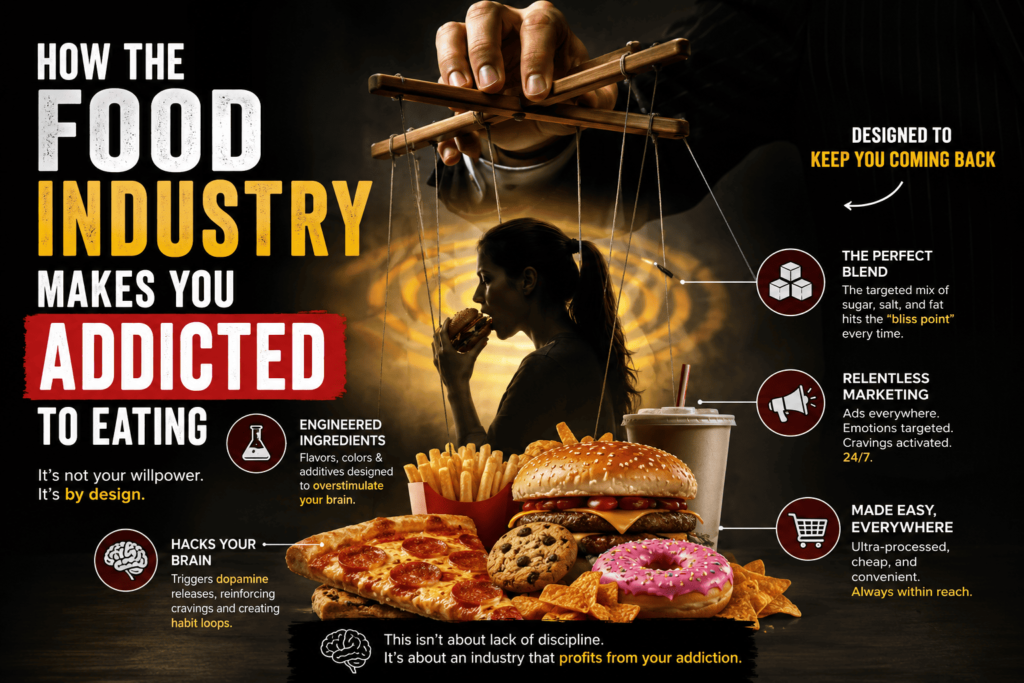
In today’s world food is not about being hungry or needing nutrition. Many modern foods are made to make people want to eat more, crave more and buy more. The food industry uses science, psychology and marketing to make foods, like crispy chips and sugary drinks addictive. This is done to make people keep eating and buying these foods. Foods are carefully designed to make people want more. The food industry does this to make sales. Processed foods are made to be highly addictive. They use science and psychology to make people crave for them. These foods are made to keep people eating.
The Science Behind Cravings
Food companies spend a lot of money, spend millions to figure out why people want food so badly. They want to know what makes people crave these foods. Scientists look at how sugar and salt and fat work. They call this mix the “bliss point”. When we eat this mix it makes our brain feel happy and it gives us dopamine. Dopamine is the chemical that makes us feel good when we do things we like or when we are addicted to something.
Companies make foods that’re not very healthy in a way that makes them taste really good. The Science Behind Cravings is important because it helps us understand why we eat these foods. Food companies make foods like this so we can eat them quickly and eat a lot of them before our brain knows that our stomach is full. The brain does not realize that the stomach is full until we have eaten a lot of calories. This is why we eat more calories than we need when we eat these foods.
Sugar: The Biggest Trigger
Sugar is one of the most addictive ingredients used in processed foods. It gives an instant burst of energy and pleasure, but frequent consumption can create a cycle of cravings. The more sugar a person eats the more our brain wants us to have it. What is even worse is that sugar is in a lot of foods that do not even taste sweet like sugar is in sauces, bread, yogurt, with flavor, cereals and snacks that come in packages.
The Role of Ultra-Processed Foods
Ultra processed foods are very easy to get and not expensive and are usually very tasty. It is different from the food that grows naturally. The natural stuff in food like fiber and good things that help our body are taken out. Instead they put in flavors to make it last longer and bad ingredients that are not good for us. These foods digest quickly, causing rapid spikes and crashes in blood sugar. After the crash, the body craves more food again, creating a repetitive cycle of hunger and overeating.
Examples include:
- Chips
- Soft drinks
- Instant noodles
- Fast food burgers and fries
- Chocolates and packaged desserts
Ultra-processed foods like these can be really bad for our health, they are not like foods at all.
Clever Marketing Tactics
The food industry does not just sell food it sells emotions and habits and lifestyles. Advertisements usually connect junk food with being happy, feeling comfortable having friends celebrating or getting relief from stress. Bright packaging, catchy jingles and there are celebrities who say they like the food and sometimes the food is only available for a time all of these things make people decide to buy the food.
Children are targeted a lot through cartoons and packaging that’s colorful and fun and through promotions on social media, which makes them have unhealthy eating habits when they are very young.
Portion Sizes Have Increased
Over the years, portion sizes in restaurants and packaged foods have grown significantly. When we get a lot of food we start to think that eating much is normal. The food industry has something called “value meals” and “combo offers” that make people eat food that they really need because it seems like a good deal and we want to save money. So we end up eating more quantity.
Why It’s Hard to Stop Eating
Processed foods are often low in fiber and protein. These are the things that help people feel full. Instead, it has a lot of carbs and unhealthy fats which might makes us feel full for a while but they do not keep us full for very long. This is why a lot of people feel hungry again soon after they eat junk food. They might have eaten a lot of calories. The junk food does not keep them full because it is not a good source of fiber and protein.
Social Media and Food Addiction
Food content is everywhere today. Viral videos of food, mukbangs and aesthetic dessert reels make us want to eat even when we are not hungry. When we see these things over and over our brain starts to want food more often.
We see food content. It makes us crave food. Mukbangs and dessert reels are examples of food content that stimulate our cravings. These food videos train our brain to desire foods that’re very rewarding. As a result we want these foods more often.
Breaking the Cycle
Avoiding food addiction doesn’t mean never enjoying treats. The main thing is to understand how certain foods are made to make you want to eat them all the time.
Some healthy strategies include:
- Eating more whole foods
- Increasing protein and fiber intake
- Cooking meals at home
- Reading ingredient labels
- Avoiding emotional eating
- Limiting sugary drinks and packaged snacks
The ProGen approach
ProGen Weight Management does not just focus on losing weight they also focus on rebuilding a relationship with food. One of the benefits of ProGen is that it helps people understand the difference between being truly hungry, having cravings, eating because of emotions and being addicted to food because of the food we buy in stores.
By reducing sugar dependency and ultra-processed foods, ProGen helps stabilize blood sugar levels, reduce constant cravings, and improve satiety. Higher protein intake and planned nutrition also help people stay fuller for longer, making it easier to avoid binge eating and unhealthy snacking.
More importantly, ProGen teaches long-term behavioral control and gives people a structured approach to regain control over their food habits and overall health.
References
- Hough, K., Friuli, M., Avena, N. M., & Romano, A. (2026). The addicted brain: How processed foods hijack reward pathways. Pharmacological Research, 224, 108097. https://www.sciencedirect.com/science/article/pii/S1043661826000125
- Young, L. J. (2025, December 30). Can ultraprocessed foods be addictive? A neuroscientist weighs in. Scientific American. https://www.scientificamerican.com/article/what-makes-ultraprocessed-foods-addictive/
- Gunnars, K. (2024, June 24). How to overcome food addiction. Healthline. https://www.healthline.com/nutrition/how-to-overcome-food-addiction
- Schiestl, E. T., Rios, J. M., Parnarouskis, L., Cummings, J. R., & Gearhardt, A. N. (2021). A narrative review of highly processed food addiction across the lifespan. Progress in Neuro-Psychopharmacology and Biological Psychiatry. https://www.sciencedirect.com/science/article/abs/pii/S0278584620304681

About Author – TANIYA
Dt. Taniya Chatterjee is a dedicated nutrition expert known for her practical, science-backed, and deeply empathetic approach to health and wellness.