
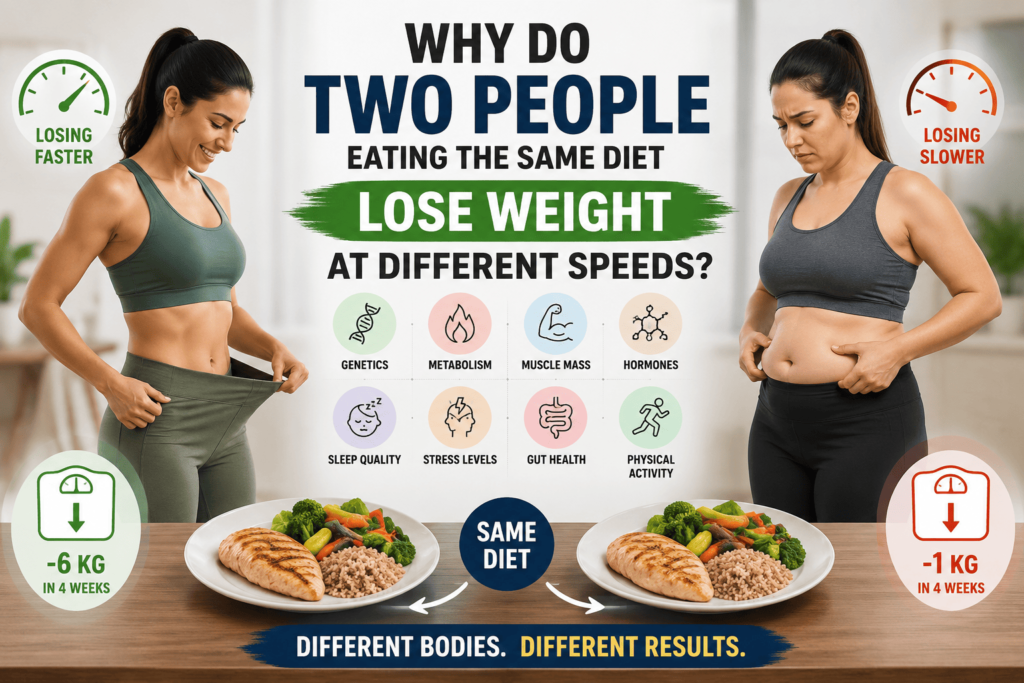
Have you ever started a weight loss journey with a friend, followed the same meal plan, skipped the same treats, and even worked out together, only to find that they lose weight much faster than you? It can be disappointing, and you may even start wondering if you’re doing something wrong.
The truth is, you’re probably not.
Weight loss is influenced by much more than just the food on your plate. Every person’s body works differently, which means the same diet can produce completely different results. Understanding these differences can help you stop comparing your journey and start focusing on what actually works for you.
1. Your Body Burns Calories at Its Own Pace
Think of your metabolism as your body’s engine. Some engines naturally run faster, burning more calories throughout the day, while others are more fuel-efficient and use fewer calories.
Your metabolic rate is influenced by factors such as your age, gender, body size, muscle mass, and even your genes. That’s why two people eating identical meals may not burn the same number of calories.
2. More Muscle Means Higher Calorie Burn
Muscle is metabolically active, meaning it requires more energy than fat, even when you’re resting.
For example, two people may weigh exactly the same, but the one with more muscle will generally burn more calories over the course of the day. This can make their weight loss appear faster, even if both individuals are eating the same foods.
3. Hormones Can Affect the Number on the Scale
Your hormones have a major influence on appetite, fat storage, and how efficiently your body uses energy.
Conditions like insulin resistance, hypothyroidism, or PCOS can make weight loss slower despite following a healthy diet. On top of that, high stress levels increase cortisol, a hormone that can encourage fat storage, especially around the waist, while also increasing cravings for unhealthy foods.
4. Your Genes Also Play a Role
Genetics don’t decide whether you’ll succeed or fail, but they do influence how your body responds to food and exercise.
Some people naturally lose weight more easily, while others need a little more time and consistency to see similar results. It’s simply the way our bodies are built, and it doesn’t mean one person is working harder than another.
5. Sleep Is More Important Than Most People Realize
If you’re eating well but sleeping poorly, your body may struggle to lose weight efficiently.
Not getting enough sleep can increase hunger hormones, reduce feelings of fullness, and leave you craving sugary or high-calorie foods. At the same time, poor sleep can affect your energy levels, making it harder to stay active during the day.
6. It’s Not Just Exercise, It’s Everyday Movement
A one-hour workout is great, but what you do during the other 23 hours also matters.
Walking around the office, climbing stairs, doing household chores, standing instead of sitting, and even fidgeting all contribute to the calories you burn. This everyday movement is known as Non-Exercise Activity Thermogenesis (NEAT), and it can vary greatly from one person to another.
7. Your Gut Health May Influence Weight Loss
Your digestive system is home to trillions of beneficial bacteria that help with digestion, nutrient absorption, and overall metabolism.
Research continues to show that a healthy gut microbiome may support better weight management. Differences in gut bacteria could be one reason why two people respond differently to the same eating pattern.
8. Small Daily Habits Make the Biggest Difference
Sometimes, the diet isn’t the issue. It’s the little things we often overlook.
Extra bites while cooking, oversized portions, sugary beverages, frequent weekend treats, or inconsistent meal timings can quietly add up over time. Weight loss isn’t about being perfect every day. It’s about being consistent with healthy habits most of the time.
Remember, progress isn’t always reflected by a steady drop on the scale. Plateaus and temporary fluctuations are a normal part of the journey.
Your Journey Doesn’t Have to Look Like Anyone Else’s
One of the biggest mistakes people make is comparing their progress with someone else’s.
Every body has its own starting point, challenges, and pace of change. Instead of asking, “Why am I losing weight slower?”, try asking, “What can I do to help my body perform better?” That simple change in perspective can make your journey much more positive and sustainable.
Conclusion
Weight loss is never determined by a single factor. While nutrition is essential, it’s only one part of the equation. Your metabolism, muscle mass, hormones, genetics, sleep, stress levels, gut health, and everyday lifestyle habits all influence how quickly your body responds to a diet.
Rather than comparing your progress with others, focus on understanding your own body and giving it what it needs. Sustainable weight loss doesn’t come from following the same plan as everyone else. It comes from following an approach that’s built around your individual needs, preferences, and health goals. When your nutrition plan is personalized, realistic, and supported by consistent healthy habits, lasting results become much more achievable.