
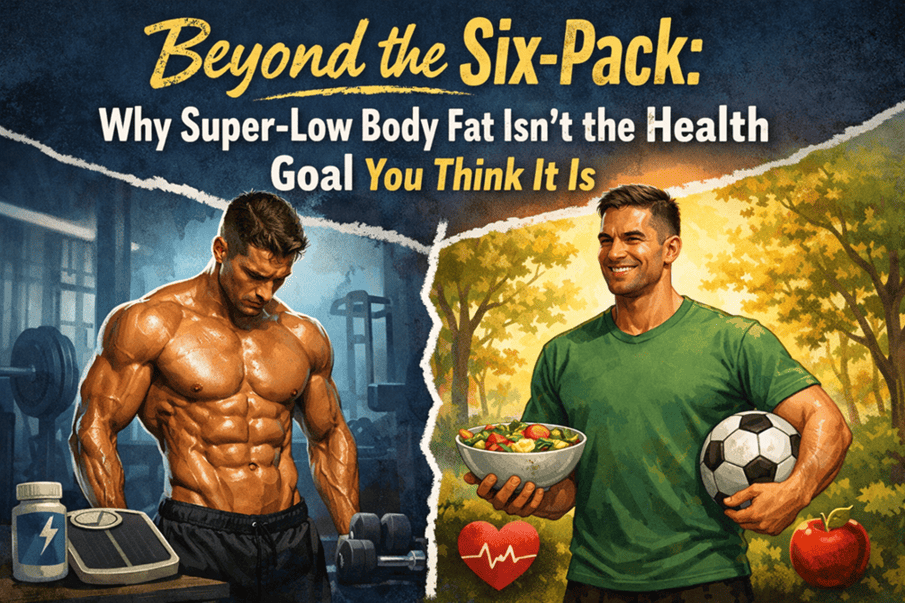
In the age of social media fitness influencers and “shredded” physique transformations, we’ve been conditioned to believe that visible veins and razor-sharp abs are the ultimate indicators of health. We see a sub – 10% body fat percentage (for men) or sub -15% (for women) and equate it with peak performance and discipline.
However, there is a massive difference between being fit and being physiologically depleted. While maintaining a healthy weight is vital, chasing “essential” levels of body fat can actually backfire, leading to a cascade of hormonal and physical issues.
The “Shattered” Illusion: What Happens Under the Hood
When body fat drops below a certain threshold often referred to as the “set point” the body enters a state of perceived starvation. It doesn’t know you’re trying to look good for a beach photo; it thinks you’re in a famine.
1. Hormonal Havoc
Body fat isn’t just stored energy; it’s an active endocrine organ. It produces leptin, the hormone that signals satiety and regulates metabolic rate. When body fat becomes too low, leptin levels plummet. This triggers a massive spike in ghrelin (the hunger hormone), leading to obsessive thoughts about food and uncontrollable cravings.
For women, this often results in Amenorrhea (loss of the menstrual cycle), as the body shuts down non-essential functions like reproduction to save energy.
2. The Testosterone Trap
Research shows that extreme leanness significantly suppresses testosterone levels in men. A study published in the International Journal of Sports Physiology and Performance tracked a natural bodybuilder for six months. At his leanest, his testosterone levels dropped by nearly 75%, and he experienced significant loss of strength and libido.
3. Decreased Bone Density
Low body fat is often accompanied by low energy availability. This puts individuals at a high risk for osteopenia or osteoporosis. Without enough fat to assist in hormone production and nutrient absorption (like Vitamin D), bone mineral density suffers, making fractures far more likely.
Performance vs. Aesthetics
There is a reason why many elite athletes, especially those in strength and power sports don’t walk around at 6% body fat. Extreme leanness usually comes at the cost of recovery.
When you are “shredded,” your body’s ability to repair muscle tissue after a workout is compromised. Your sleep quality often declines due to increased cortisol (the stress hormone), and your immune system weakens. You might look like a superhero, but you’ll likely feel like you’re running on fumes.
Finding the “Sweet Spot”
Health exists on a bell curve. While high levels of body fat (obesity) carry well-documented risks, the “danger zone” at the bottom of the curve is equally real. For most people, the healthiest body fat range where energy is high, hormones are balanced, and mental clarity is sharp looks like:
- Men: 12% to 20%
- Women: 20% to 30%
Final Thought
Consistency beats intensity every time. Instead of chasing a “shredded” look that is unsustainable and potentially harmful, aim for a body fat percentage that allows you to eat socially, sleep deeply, and train with vigor. True health is about how your body functions, not just how it reflects light in a mirror.
Summary of Research & References
- Rossow, L. M., et al. (2013). Natural Bodybuilding Competition Preparation and Recovery: A 12-Month Case This paper highlights how extreme dieting for a competition resulted in a 75% drop in testosterone and required six months of recovery to return to baseline levels.
- Longman, D., et al. (2020). Energy Availability and Reproductive Function. This research explores the “Female Athlete Triad,” demonstrating how low energy availability (linked to low body fat) leads to bone loss and reproductive
- Friedl, E., et al. (1994). Lower limit of body fat in healthy active men. This classic study conducted by the U.S. Army found that when men dropped below 4-6% body fat, their physical performance and immune markers significantly deteriorated.
- Muller, J., et al. (2015). Metabolic adaptation to caloric restriction and subsequent refeeding. This study explains how the body slows down its basal metabolic rate (BMR) to survive low-fat states, making long-term maintenance nearly impossible.
Ready to Transform Your Body and Mind?

About Author – Siri Gowri
Siri is a Dedicated Clinical Dietitian with 3+ years of experience in weight loss and nutrition. She creates personalized, science-backed plans to help clients manage obesity, diabetes, and achieve lasting health.