
Table of Contents
For many years, sweets and added sugar have been viewed as the main obstacles to better health. Whether the goal is weight loss, improved metabolism, mental clarity, or steady energy, people are often told that completely avoiding sweets is necessary to see results.
As a result, many adopt an all-or-nothing mindset, cutting out desserts entirely and treating sugar as something to be eliminated at all costs. However, emerging research suggests that this rigid approach may not be the most effective or sustainable strategy. Studies show that completely cutting out sweets does not always reduce cravings or change how the brain responds to sweet tastes, and in some cases, strict restriction can make long-term adherence more difficult.
This has led researchers to explore a different approach:
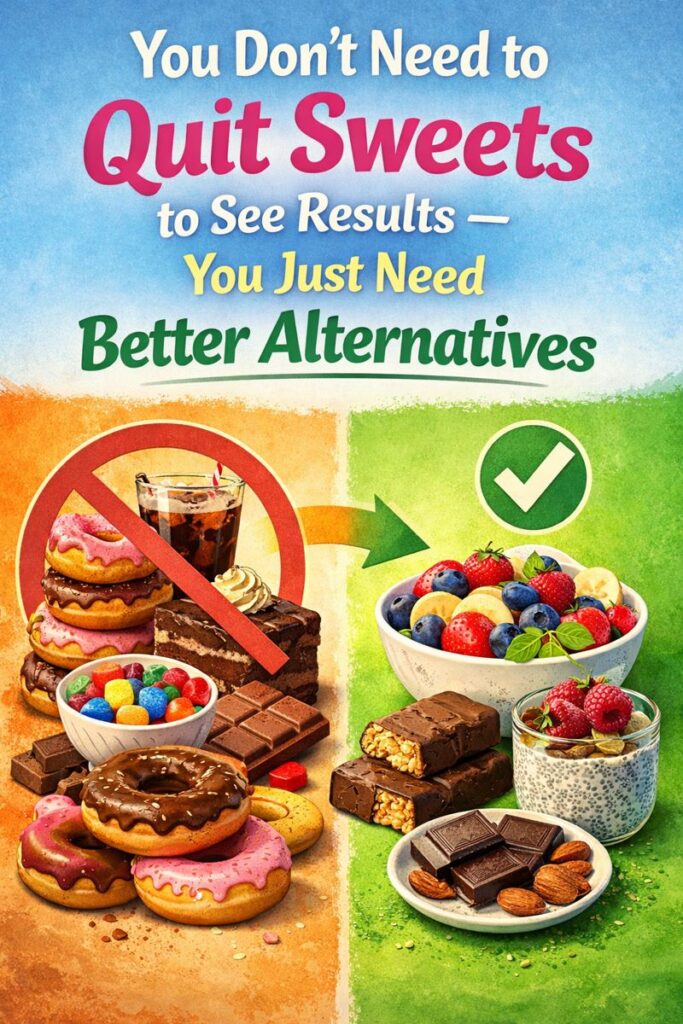
you don’t need to quit sweets to see results — you just need better alternatives.
The Science of Sugar, Cravings, and Health
Understanding the role of sugar in the body is key to understanding why elimination often fails.
A large review published in a peer-reviewed nutrition journal found that high intakes of added sugar—particularly from processed foods and sugar-sweetened beverages—are associated with obesity, insulin resistance, metabolic syndrome, cardiovascular disease, and cognitive concerns. Excessive sugar consumption is also linked to inflammation and impaired energy regulation.
However, the review also emphasizes that these outcomes are not the result of sugar alone. The effects of sugar depend heavily on overall diet quality, lifestyle habits, physical activity, and individual metabolism. In other words, sugar is part of a larger picture, not a standalone cause of poor health.
This shifts the focus from asking whether sugar is “bad” to considering how sweet foods are consumed and how they fit into an overall dietary pattern.
Why Cutting Out Sweets Completely Often Doesn’t Work
Research has shown that avoiding sweets does not necessarily reduce sweet cravings.
A six-month randomized study found that participants who significantly reduced their sugar intake did not experience a decrease in their preference for sweet flavors compared to those who continued eating as usual. Even after months of reduced sugar consumption, sweet taste preferences remained largely unchanged.
This suggests that sweet cravings are influenced by genetics, early exposure, and long-term habits rather than short-term sugar intake alone. As a result, strict avoidance may increase frustration without delivering the expected benefits.
For individuals trying to improve their health, this means that a sustainable strategy is more effective than one based on strict restriction.
What Happens When Sugar Intake Is Reduced
Although cutting out sugar entirely does not reset sweet preferences, reducing added sugar can still lead to noticeable physical changes over time.
Research and health observations describe several common patterns when sugar intake is reduced
Week 1:
Many people experience fatigue, headaches, mood changes, and increased cravings as the body adjusts to lower sugar intake. These symptoms are linked to changes in blood sugar regulation and reduced dopamine stimulation.
Week 2:
Cravings often become less intense and less frequent. Energy levels stabilize, blood sugar fluctuations decrease, and mental clarity may improve.
Week 3 and beyond:
Improvements in sleep, digestion, skin health, and appetite control are commonly reported. Taste sensitivity may also increase, making naturally sweet foods more satisfying.
While these changes show the body’s ability to adapt, research confirms that a preference for sweet taste generally remains, even with reduced sugar intake.
Better Alternatives Instead of Elimination
If strict sugar avoidance does not reliably reduce cravings and can create unnecessary stress, a more effective approach is focusing on better alternatives.
Rather than banning sweets, attention should be placed on quality and balance:
Nutrient-dense sweet options:
Whole fruits, naturally sweet foods, and desserts containing fiber or protein provide sweetness while supporting fullness and nutrition.
Balanced meals:
Including protein, fiber, and healthy fats helps stabilize blood sugar and reduce cravings triggered by rapid sugar spikes and crashes.
Satisfaction and volume:
Foods such as Greek yogurt with fruit or homemade fruit-based desserts offer sweetness in a form that supports overall health.
Health experts increasingly agree that balanced eating patterns are more effective for managing cravings and supporting long-term health than strict avoidance.
The Pitfalls of an All-or-Nothing Mindset
An all-or-nothing approach to sweets can create several challenges.
When foods are completely restricted, they often become more appealing, intensifying cravings rather than reducing them. Additionally, even if short-term improvements occur, taste preferences often return once normal eating resumes, indicating that elimination alone does not build lasting habits.
Overly strict dietary rules can also increase the risk of binge-restrict cycles, which negatively affect both mental and physical health. Sustainable progress depends on consistency, flexibility, and enjoyment of food.
Conclusion
Lasting results do not come from extreme rules or eliminating entire food groups. Completely avoiding sweets is rarely necessary, and for many people, it can actually make consistency harder to maintain.
What truly matters is how sweets fit within the overall diet. When quality, balance, and portion awareness are prioritized, sweet foods do not prevent progress. Choosing better alternatives can support stable blood sugar levels, reduce cravings, and promote a healthier relationship with food.
Sustainable health should be realistic, flexible, and enjoyable. Nutrition strategies that align with daily life are far more likely to lead to long-term success.
References
https://pmc.ncbi.nlm.nih.gov/articles/PMC9966020/
https://www.delish.com/food-news/a68001587/cutting-sweets-cravings-study/
https://www.prevention.com/health/a65191313/what-happens-to-your-body-when-you-stop-eating-sugar/
Ready to Transform Your Body and Mind?

About Author – Sohini Sarkar
Nutrition coach dedicated to helping individuals achieve sustainable fat loss and better health through science-backed diet strategies and personalized guidance