
Table of Contents
When most people think about obesity, the picture that instantly comes to mind is “too much fat.” Extra weight. Bigger numbers on the scale. Tight clothes. Endless dieting. And yes, fat gain is part of the story… but it’s not the whole story.
Behind the scenes, something much more sneaky is happening inside the body. Something that quietly fuels weight gain, slows metabolism, worsens cravings, and keeps people stuck in a cycle of trying everything but seeing nothing change.
That hidden culprit? Inflammation.
And once you understand how inflammation hijacks your body, the entire struggle with weight finally starts to make sense.
Fat doesn’t just sit there. It sets the tone.
Think of your body as a well-run city. Hormones communicate smoothly, digestion stays efficient, metabolism hums along quietly in the background. Everything has a role, and when things are balanced, the system works.
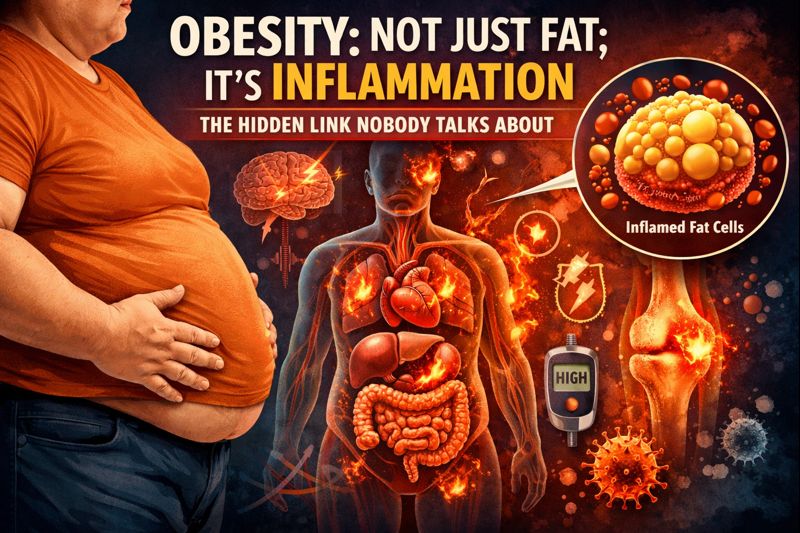
But excess fat, especially around the abdomen, changes the environment. It behaves less like stored energy and more like a disruptive resident. Fat tissue actively releases inflammatory chemicals called cytokines, creating a state of constant, low-grade inflammation. (2)
These aren’t dramatic flare-ups that land you in the hospital. They’re subtle, ongoing sparks just enough to drain your energy, slow your metabolism, disturb hormones, and throw your internal systems off balance.
That’s why obesity is no longer viewed as simply “eating too much.” Science now recognizes it as a complex inflammatory condition, where the body is stuck in a state of internal stress long before the weighing scale tells the story. (1)
Why inflammation is such a villain
1. It slows down your metabolism
Inflammation interferes with how mitochondria (your body’s energy factories) work. When they get sluggish, your body burns fewer calories, even at rest. (3)
This is why some people say:
“I barely eat, but I still gain weight.”
It’s not imagination. It’s inflammation.
2. It disrupts hunger hormones
Leptin (the “I’m full” hormone) and ghrelin (the “I’m hungry” hormone) get completely mixed up.
Inflammation makes your brain less sensitive to leptin, so even when you’ve eaten enough, your brain responds like you’re starving. (4)
Cue cravings.
Cue overeating.
Cue guilt.
Cue weight gain.
It’s a vicious cycle that many people mistakenly blame on willpower.
3. It spikes insulin resistance
This is one of the biggest connections between obesity and chronic diseases.
When your cells become resistant to insulin, your body pumps out even more of it. High insulin levels make it almost impossible to burn fat.
You’re basically stuck in fat-storage mode 24/7.
4. It increases water retention and bloating
Inflammation attracts water.
This is why people feel “puffy,” swollen, or heavy even if they haven’t gained actual fat.
Sometimes, the first few kilos lost during a good diet are not just fat—they’re inflammation and water weight finally releasing.
5. It affects mood, sleep, and energy
Inflammation doesn’t just sit quietly in your belly fat; it travels.
It can reach your brain and affect:
- mood
- willpower
- sleep quality
- stress levels
- motivation
Suddenly, everything feels harder. Every goal feels bigger. Every attempt feels heavier.
It’s not “laziness.”
It’s biology.
And here’s the biggest twist…
Inflammation actually causes obesity. And obesity causes more inflammation.
It’s a double loop.
No wonder traditional diets that only cut calories don’t work.
No wonder people regain weight even after losing it.
No wonder the body refuses to cooperate when the approach only focuses on the symptom (fat) instead of the root cause (inflammation).
So where does inflammation even come from?
A lot of everyday habits trigger it, sometimes without you even noticing, like:
- processed sugars
- excessive snacking
- poor sleep
- chronic stress
- lack of protein
- hormonal imbalance
- gut issues
- long sitting hours
- irregular meals
- hidden nutrient deficiencies
And for many people, this inflammation builds up silently for years before weight becomes a noticeable problem.
That’s why the real breakthrough happens when someone starts addressing inflammation, not just calories or portion sizes.
The future of weight loss is inflammation-focused
The world is slowly shifting toward this understanding.
Successful weight management today looks like:
- balancing insulin
- stabilizing hormones
- Reducing inflammatory foods
- improving gut health
- entering ketosis (a naturally anti-inflammatory state)
- supporting muscle mass
- optimising nutrient intake
When inflammation goes down, your body stops fighting you and starts working with you.
You suddenly feel lighter, not just physically but mentally.
Your hunger stabilizes.
Your cravings reduce.
Your energy improves.
Your sleep gets better.
Your metabolism wakes up.
It feels like your body finally sighs in relief.
Here’s where ProGen comes in: We don’t just target fat. We target inflammation.
This is exactly why ProGen’s approach is different from conventional dieting.
The focus is not on starving the body or forcing weight loss. The goal is to reset your metabolic system from the root.
Here’s how ProGen helps reduce inflammation while also helping you lose weight:
1. The diet takes you into nutritional ketosis
Ketosis is scientifically known to reduce inflammation markers in the body.
It improves insulin sensitivity, reduces oxidative stress, and starts healing the metabolic dysfunction that leads to weight gain.
2. High-quality protein helps preserve muscle and reduce inflammatory load
Losing muscle actually increases inflammation.
ProGen prevents this by providing complete protein so your metabolism stays active and stable.
3. Controlled carbs reduce insulin spikes
No spikes = no inflammation cycles.
This gives your system a chance to recover and function the way it’s supposed to.
4. The program improves lifestyle patterns
Hydration, sleep timing, portion structure, and movement all of these play a huge role in reversing chronic inflammation.
5. The results are not “temporary weight loss”
Because the program works on the metabolic root (inflammation), not just on calories, people experience:
- reduced bloating
- decreased cravings
- better digestion
- improved hormonal balance
- sustained energy
- long-term fat loss
This is not just shrinking the body; it’s healing it.
Final thoughts
Obesity is far more than “extra fat.” It’s a chronic inflammatory condition that affects almost every function in the body. When we stop blaming willpower and start addressing inflammation, everything changes.
Weight loss stops feeling like a punishment.
Food stops being confusing.
And the body finally responds the way you always wished it would.
That’s exactly what ProGen is designed to help you achieve.
By lowering inflammation, improving metabolic health, and guiding your body into a natural fat-burning state, ProGen helps you lose weight and correct the root cause behind it.
In short:
ProGen doesn’t just change how you look. It changes how your body works.
REFERENCES-
https://www.mdpi.com/2075-1729/14/7/856

About Author - Dt Swathi
Swathi is a clinical dietitian with over 3 years of expertise in nutrition and weight management. She focuses on crafting personalized nutrition plans tailored to help individuals manage obesity and chronic health conditions, including diabetes